
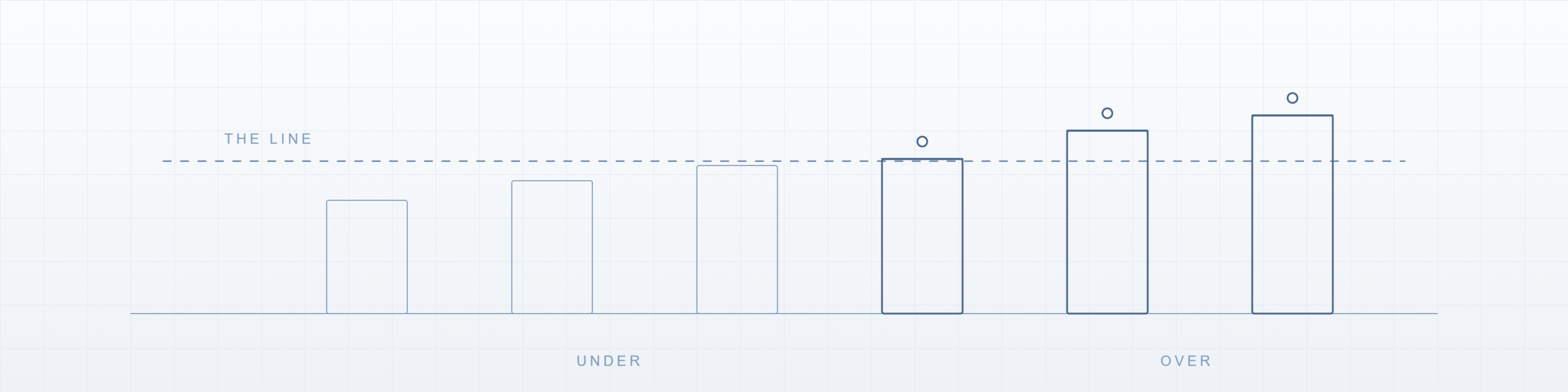
Every year, each New York taxpayer who is 59½ or older may subtract up to $20,000 of qualifying retirement income from New York taxable income, and a Roth conversion qualifies. For a household with a public pension that New York already exempts and a seven-figure IRA that New York will tax when the required distributions start, that subtraction is a $20,000 Roth conversion a year at a state cost of zero. It does not carry forward. Every year it is not used, it is gone.
The rule
The subtraction goes on line 29 of Form IT-201 and is capped at $20,000 per person regardless of source. A married couple who both qualify can subtract up to $40,000, but each spouse’s $20,000 applies only to that spouse’s own income; one spouse cannot use the other’s unused room. Qualifying income is periodic and lump-sum payments from an IRA, a 401(k), a 403(b), a Keogh, or a private pension or annuity, as long as they are included in federal adjusted gross income.
Two kinds of income do not need it. A NYSLRS or NYSTRS pension, a New York local government pension, and a federal pension are exempt from New York tax in full on a separate line, line 26, with no cap. Social Security is not taxed by New York at all. If those are your only sources, line 29 is empty, and that is where the waste happens.
What a large IRA makes of it
Consider a retired Suffolk County police lieutenant or a Nassau superintendent: a $150,000 New York public pension that the state exempts in full, Social Security that the state does not tax, and a 457 or IRA balance of $1.4 million that is not touched until required distributions begin at 73. Every one of those years, a $20,000 subtraction that could have sheltered a conversion goes unused. At 73 the first required withdrawal is roughly $53,000 of income that is federally and New York taxable in full, and the exclusion covers $20,000 of it at most. Fourteen years of unused room, from 59½ to 73, is $280,000 that could have moved into a Roth with no New York tax at all, and the federal cost of doing it at $20,000 a year is lower than the cost of the same dollars arriving later on top of a pension and Social Security.
A Roth conversion qualifies. The Department of Taxation and Finance has said since 1998 that a taxpayer 59½ or older can exclude up to $20,000 of income from converting a traditional IRA to a Roth IRA. For a retiree with no other qualifying income, converting $20,000 a year from 59½ to 73 moves money that would eventually be taxed into an account that never is, at a New York cost of zero, leaving only the federal tax on the conversion to weigh. The cap is $20,000 in total, so a private pension or an IRA withdrawal in the same year uses the same room.
The year-end move
Before December 31, add up the qualifying retirement income you have already taken this year. If it is under $20,000 per eligible spouse, decide whether a withdrawal or a partial Roth conversion for the difference makes sense federally: the federal bracket, the Medicare premium two years out, and the taxation of Social Security all move with federal income even when New York does not. A conversion has to be complete by December 31 to count for the year, and it cannot be undone.
If you turn 59½ during the year, only qualifying income received on or after that date counts toward the exclusion for the year; income taken before it does not. Time the withdrawal accordingly.
Where to look
The New York Retirement Taxes page sets out the three tiers of New York treatment and where each subtraction goes on the return. The Medicare calculator on the Calculators page shows what an extra $20,000 of federal income does to a premium threshold. If you would like the year-end figure worked out with you, start here.
Reviewed September 12, 2026; retitled and reframed toward the Roth conversion angle September 13, 2026. Sources: New York Tax Law section 612(c)(3) and (3-a); Form IT-201 instructions for tax year 2025, lines 26 and 29; TSB-M-98(7)I (Roth IRA conversions and the pension and annuity income exclusion).
This article is general educational information and is not tax advice. The exclusion amount, age test and line references are set by New York law and can change. Confirm current figures with the New York State Department of Taxation and Finance and your tax preparer before acting.
This page is general. Your situation is not.
The exclusion is claimed a year at a time, and a conversion decided in December is settled for that year. We can cover it in a short conversation, at no charge and with no obligation.
Book your Retirement ReviewNot ready to book? Answer a few questions about your situation, or send a message.
Booking is handled through Rosefinch Investment Advisors. LI Retirement is not affiliated with, endorsed by, or sponsored by any government agency, retirement system, plan sponsor, or employer named on this site.