Author: Zachary Zanghi

  • The service cliff in the Tier 4 teacher pension, explained

    The service cliff in the Tier 4 teacher pension, explained

    Why the NYSTRS Tier 4 formula steps up at twenty years of service, how the recalculation works, and what to verify before you choose a retirement date.

    Key takeaways

    • The NYSTRS Tier 4 formula uses a smaller fraction of final average salary per year below twenty years of service, and a larger fraction at twenty years that applies to every year, not just the new ones.
    • Service credit is not the same as years employed: part-time work, substitute service, leaves and prior public service all affect the count, and NYSTRS keeps the official record.
    • Teachers who finish at the end of a school year generally file in the spring, so the months before are the time to verify credit and request an official estimate.
    • The exact fractions, the final average salary rules and the early-retirement reduction schedule are set out in the NYSTRS Tier 4 member publications and New York Education Law, Article 11.

    Most pension formulas grow smoothly: one more year of service, one more slice of pension. The New York State Teachers’ Retirement System Tier 4 formula does not. It has a step in it at twenty years of service, and the step works backwards as well as forwards. For a Long Island teacher weighing a retirement date, that step can matter more than almost anything else in the decision.

    A formula with a step in it

    The Tier 4 benefit is built from two ingredients: your years of credited service and your final average salary. Final average salary is a defined term, an average of your highest consecutive earnings years, with limits on how much any one year can grow over the ones before it. The exact averaging period and the caps are set out in the NYSTRS Tier 4 member publications, and the underlying rules sit in New York Education Law, Article 11.

    Here is the step. With less than twenty years of credited service, the formula pays a smaller fraction of final average salary for each year of service. Once you reach twenty years, a larger fraction applies, and it applies to every year of service, not only the years after the threshold. The NYSTRS publications give the fractions themselves; what matters for planning is the shape, not the arithmetic. Crossing the line recalculates the whole career at the higher rate.

    There is a further change at 30 years, where the rate for additional years shifts again, and where the early-retirement rules also change. The Tier 4 publications set out both.

    Why the recalculation matters more than the extra year

    In a smooth formula, retiring a few months early costs a few months of accrual. At the Tier 4 cliff, retiring a few months short of twenty years means every year you ever taught is paid at the smaller fraction, for the rest of your life. The difference between nineteen-and-change and twenty is not one year of pension. It is the gap between two fractions, multiplied across an entire career, multiplied again by final average salary.

    The difference between nineteen-and-change and twenty is not one year of pension. It is the gap between two fractions, multiplied across an entire career.

    That is why this cliff appears on our pension decisions page alongside the other service credit cliffs: it is one of the places where a retirement date chosen casually, to match a lease ending or a spouse’s plans, can carry a permanent cost that nobody mentioned.

    Service credit is not the same as years employed

    The twenty years that matter are years of credited service as NYSTRS counts them, not years since your first September in a classroom. The two can diverge, and on Long Island they often do:

    • Part-time and substitute service is generally credited in proportion to the work, under rules the NYSTRS publications describe. Years that felt like full years may not count as full years.
    • Leaves of absence may or may not have earned credit, depending on the kind of leave and whether contributions continued.
    • Prior public service in New York, including service in another New York public retirement system before you joined NYSTRS, may be creditable or transferable. The system’s publications explain eligibility and what it costs to claim it.
    • Military service may be purchasable as credit under state law. Again, the publications give the conditions.

    None of this is something to estimate at the kitchen table. NYSTRS keeps the official record, publishes it to members in an annual benefit profile, and will provide an official estimate on request. If the record shows you a few months short of twenty years, the question of whether any purchasable or unclaimed service closes the gap is worth settling in writing with the system, before a retirement date is filed, not after.

    The retirement date and the school calendar

    Most Long Island teachers who retire do so at the end of a school year, and they generally file with NYSTRS in the spring. That rhythm is exactly why the cliff catches people. The natural question is which June, framed as a lifestyle choice. The prior question is what the service credit record will say on that date, because one more school year on the right side of twenty changes the formula for every year that came before it.

    A separate rule sits alongside the cliff: Tier 4 members who retire before the system’s full retirement age generally take a permanent reduction, unless they have reached the service threshold at which the reduction no longer applies. The ages and the reduction schedule are in the NYSTRS Tier 4 member publications, and they interact with the service cliff in ways that depend on your own dates. Do not rely on a colleague’s numbers; their tier, their age and their credit are not yours.

    Before you file

    Three checks, in order. First, confirm your tier: it depends on when you joined the system, and your NYSTRS benefit profile states it. Second, get the official service credit figure from NYSTRS and ask, in writing, whether any prior or purchasable service would change it. Third, request an official benefit estimate for the dates you are considering, on both sides of any threshold you are near.

    Only then does the better-known decision arrive: what payment form to take, and how to protect a spouse. That choice is permanent too, and it deserves its own attention. We cover it on the pensions page above, and the broader picture for Nassau and Suffolk educators, including the dual-pension household, on our page for Long Island teachers and NYSTRS.

    This is education, not advice. The fractions, periods, ages and schedules all live in the primary sources, and your own answer depends on your own record. Start with the record.

    Sources

    • New York State Teachers’ Retirement System (NYSTRS), Tier 4 member publications
    • New York Education Law, Article 11 (Teachers’ Retirement System)

    Important disclosures. Rosefinch Investment Advisors, Inc.
    does not provide tax or legal advice. None of the information in this article
    should be considered tax or legal advice. You should consult your tax or legal
    advisers for information concerning your own specific tax/legal situation.
    Investment advisory services offered through Beacon Global Advisor Network,
    LLC, a Registered Investment Advisor. Registration as an investment adviser
    does not imply a certain level of skill or training and does not in any way
    imply Beacon Global Advisor Network, LLC, its advisory representatives, or the
    advice and services being offered are endorsed or approved upon by any
    regulatory entity including the Securities and Exchange Commission.

    The information in this article is provided for general educational
    purposes only and does not constitute investment advice or an offer to buy or
    sell any security. All investing involves risk, including the possible loss of
    principal, and past performance does not guarantee future results. Nothing in
    this article should be interpreted as a recommendation tailored to any
    individual situation.

  • Pension or the SUNY ORP: the one-time choice at Stony Brook

    Pension or the SUNY ORP: the one-time choice at Stony Brook

    What a new Stony Brook Medicine employee gives up and gains on each side of the one-time choice between the state pension system and the SUNY Optional Retirement Program.

    Key takeaways

    • Staff in some Stony Brook titles choose a retirement plan once, within 30 days of appointment, and the choice generally cannot be changed while they work for the university.
    • The state pension promises a benefit calculated by a statutory formula, while the Optional Retirement Program promises contributions to an account whose value depends on markets.
    • Contribution rates, vesting periods and retirement ages change and depend on tier, so the current figures come from NYSLRS member publications and SUNY’s ORP information for new employees.
    • Because an ORP account generates fees for investment providers and a state pension does not, anyone paid on invested assets has an interest in which way the choice goes.

    Most retirement decisions can be revisited. You can change a savings rate, move a balance, or delay a claim. The choice some Stony Brook Medicine employees face in their first weeks on the job is different. As the Stony Brook Medicine page on this site explains, staff in some titles choose a retirement plan once, within 30 days of appointment, and the choice generally cannot be changed while they work for the university. That makes it worth understanding before the window opens, not after it closes.

    Who faces the choice, and what is on the menu

    Stony Brook Medicine staff are employed by the State University of New York, so the retirement options are set by the state, not the hospital. Which options appear on a given employee’s menu depends on the title of the appointment. SUNY’s Optional Retirement Program information for new employees describes who is eligible to elect the ORP and which state retirement systems are the alternatives for each category of title. For many hospital titles the alternative is the New York State and Local Retirement System, NYSLRS, and a new member of that system joins its current tier, Tier 6. If you are unsure which systems your title qualifies you for, that SUNY document and the campus benefits office are the places to confirm, because this article cannot know your title.

    The defined benefit path: a pension set by statute

    A defined benefit pension is a promise of an amount. The rules for NYSLRS tiers are written into the New York Retirement and Social Security Law, in Articles 14 and 15, and the benefit at retirement comes from a formula in that law: it is built from your years of credited service and an average of your earnings over a period the statute defines. The result is a monthly payment for life. It does not rise or fall with markets, and the investment risk sits with the state’s pension fund, not with you.

    The pension has conditions. Members contribute from their pay at rates set in law, and the pension only becomes yours after a minimum period of credited service, called vesting, also set in statute. Leave state service before vesting and you generally have a right to your own contributions back, not to a pension. The formulas, contribution rules, vesting periods and retirement ages differ by tier and have changed over the years, which is why this article states none of them. The NYSLRS member publications on Tiers 4, 5 and 6 give the current figures for each tier, and the site’s Tier 6 pension calculator walks through how the current formula fits together.

    The defined contribution path: the SUNY ORP

    The Optional Retirement Program is a promise of contributions, not of an amount. SUNY and the employee pay into an account held in the employee’s name with one of the investment providers SUNY authorizes, and the balance at retirement depends on what went in and how the investments performed. There is no statutory benefit formula. The account is generally portable if you leave SUNY, which matters to people who do not expect to spend a career there. It produces lifetime income only if you arrange that yourself, by a withdrawal plan or by using the balance to buy an annuity, an insurance contract that pays income for life.

    The pension promises an amount. The ORP promises contributions. Nearly everything that matters in this choice follows from that one difference.

    Contribution rates and the ORP’s own vesting rules are described in SUNY’s Optional Retirement Program information for new employees. Do not rely on a colleague’s memory of them: colleagues who joined in different years may have joined under different terms.

    What the decision actually turns on

    Stripped to its essentials, the choice is about who bears which risk, and for how long you expect to stay.

    • Who bears investment risk. In the pension, the state does. In the ORP, you do, in both directions.
    • How long you stay. The pension formula rewards long service and vesting; the ORP travels with a shorter stay.
    • Longevity. A pension pays as long as you live. An ORP balance lasts as long as the money does, unless you convert it to lifetime income.
    • The fine print. Survivor benefits, disability provisions and post-retirement adjustments work differently in each, and the details are in the statute, the NYSLRS publications and the SUNY ORP materials, not in any summary, including this one.

    One conflict of interest is worth naming plainly: an ORP account holds investments that generate fees for investment providers, and a state pension does not, so anyone who is paid on invested assets has a financial interest in which way a new employee chooses.

    Where the current rules and figures live

    This article has deliberately stated no contribution rate, vesting period, retirement age or deadline beyond the 30-day window the Stony Brook page describes, because those figures depend on tier and change over time. The current rules come from three places: the New York Retirement and Social Security Law for the statutory framework, the NYSLRS member publications for the pension tiers, and SUNY’s Optional Retirement Program information for new employees for the ORP and for eligibility by title. Your appointment letter and the campus benefits office confirm your own window. The voluntary savings plans available at Stony Brook are a separate matter from this choice, and the Stony Brook Medicine page covers them alongside the rest of the picture.

    Sources

    • New York Retirement and Social Security Law, Articles 14 and 15
    • New York State and Local Retirement System (NYSLRS), member publications on Tiers 4, 5 and 6
    • State University of New York, Optional Retirement Program information for new employees

    Important disclosures. Rosefinch Investment Advisors, Inc.
    does not provide tax or legal advice. None of the information in this article
    should be considered tax or legal advice. You should consult your tax or legal
    advisers for information concerning your own specific tax/legal situation.
    Investment advisory services offered through Beacon Global Advisor Network,
    LLC, a Registered Investment Advisor. Registration as an investment adviser
    does not imply a certain level of skill or training and does not in any way
    imply Beacon Global Advisor Network, LLC, its advisory representatives, or the
    advice and services being offered are endorsed or approved upon by any
    regulatory entity including the Securities and Exchange Commission.

    The information in this article is provided for general educational
    purposes only and does not constitute investment advice or an offer to buy or
    sell any security. All investing involves risk, including the possible loss of
    principal, and past performance does not guarantee future results. Nothing in
    this article should be interpreted as a recommendation tailored to any
    individual situation.

  • The household that owes New York $721,694 and nothing to the IRS

    The household that owes New York $721,694 and nothing to the IRS

    A line drawing of a cliff edge: a level surface running to a marked threshold, then a sheer drop to a much lower shelf, labelled one dollar under and one dollar over.

    Here is a Long Island household that is not wealthy in any way its neighbors would notice, owes the federal government no estate tax at all, and owes New York $721,694. Everything in it is ordinary. The arithmetic is not.

    The inventory

    A couple in their seventies. One of them has died; this is the second death, which is when New York collects. The estate looks like this.

    ItemValueIn the New York estate
    The house, bought in 1989, paid off$1,400,000Yes, at market value
    His rollover IRA, from a corporate career$2,600,000Yes, in full
    Her 403(b), from the school district$900,000Yes, in full
    Joint brokerage account$1,800,000Yes
    Term life policy, owned personally$1,000,000Yes, the whole death benefit
    Condominium in Florida$600,000No, subtracted

    The federal gross estate is $8,300,000. Against a 2026 federal basic exclusion of $15,000,000 per person, there is no federal estate tax and no federal return is required for that reason. Most advisers who look only at the federal number will tell this family, accurately, that they do not have an estate tax problem.

    The New York taxable estate is $7,700,000, because real property and tangible personal property located outside New York State come out. The 2026 New York exclusion is $7,350,000. The New York tax is $721,694.

    Where the money actually went

    Look at what the last $350,000 of estate value cost. At $7,350,000 this family owes New York nothing. At $7,700,000 it owes $721,694. Three hundred and fifty thousand dollars of additional estate produced seven hundred and twenty-one thousand dollars of tax, an effective rate above 200%, because crossing the exclusion does not just tax the excess. It takes the exclusion away.

    Now look at the term life policy. It is $1,000,000 of the estate, and it is there only because the insured owned the policy. Money that is going to a beneficiary, that never touches probate, that the family thinks of as being outside the estate entirely, is in the estate because of who held the contract. Remove that one item and the New York taxable estate is $6,700,000, which is under the exclusion, and the New York tax is nothing.

    One ownership question on one insurance policy is the difference between $721,694 and zero.

    The one thing this household got right without knowing it

    The Florida condominium is the one piece of good news, and it is worth naming because the instinct about it is usually wrong. For a New York resident, real property and tangible personal property located outside New York State are subtracted from the New York gross estate. That $600,000 condominium would have added $93,906 of New York tax if it had been a brokerage account of the same value instead.

    Intangible property does not work that way. A brokerage account, a bank account, shares in a company: these follow the owner rather than a location, and for a New York resident they stay in the New York estate wherever the institution sits. Moving the account to a Florida branch of the same bank changes nothing at all.

    The part that is already lost

    This is the second death. The first spouse’s New York exclusion is gone, because New York does not have portability and the first estate passed everything outright to the survivor. Federally that exclusion would have carried over. In New York it evaporated, and it was worth another $7,350,000 of shelter.

    It is not fixable after the fact. It is fixed in advance, with a credit shelter trust that is actually funded, or with the New York qualified terminable interest property election, which for deaths on or after April 1, 2019 is made directly on the New York return and is irrevocable once made.

    And the part that is about to be

    The tax is due within nine months of death, in cash. This estate is a house, two retirement accounts, a brokerage account and an insurance payout. The insurance will cover a good deal of it, which is one of the arguments for holding insurance at all, though not for holding it in your own name.

    Then there is the second tax nobody has counted. The $3,500,000 in retirement accounts is income to whoever inherits it, taxed at their rates, and a designated beneficiary who is not an eligible designated beneficiary must empty the account within ten years. Two children in their peak earning years will take that on top of their own income. The estate tax is the bill that arrives in nine months. The income tax is the one that arrives over the following decade.

    Where to look

    The New York estate tax page explains how the taxable estate is built, what the cliff does, and why the out-of-state rule works the way it does. The estate tax calculator will put your own figure against the exclusion for the year of death and show the marginal cost of the next $10,000. None of this is an investment question, and none of it is solved by a product: it is solved by an attorney drafting documents and by getting the titling right. If you would like to know where you stand before that conversation, start here.

    Published September 13, 2026. The household is illustrative and is not a client. Figures computed with this site’s own estate tax calculator, which uses the New York rate table and the 2026 basic exclusion amount of $7,350,000. Sources: New York State Department of Taxation and Finance estate tax pages; Form ET-706 and its instructions, including Schedule B for property located outside New York State and the statement that New York does not conform to the federal portability rule; New York Tax Law section 952; IRS Revenue Procedure 2025-32, section 4.14, for the 2026 federal basic exclusion amount.

    This article is general educational information and is not tax or legal advice. The New York exclusion changes every January by date of death. Estate planning decisions turn on specific facts and on how assets are titled, and they should be taken to an attorney who practices in this area.

    This page is general. Your situation is not.

    An estate a little over the exclusion can owe tax on the whole of it, and the fix has to be in place before death rather than after. We can cover it in a short conversation, at no charge and with no obligation.

    Book your Estate Tax ReviewNot ready to book? Answer a few questions about your situation, or send a message.

    Booking is handled through Rosefinch Investment Advisors. LI Retirement is not affiliated with, endorsed by, or sponsored by any government agency, retirement system, plan sponsor, or employer named on this site.

  • New York adds gifts back for three years, and never asks what you were thinking

    New York adds gifts back for three years, and never asks what you were thinking

    A line drawing of three wrapped gifts standing on a timeline, with a dotted arc sweeping back from a marked date across all three, and a bracket beneath labelled three years before.

    New York has no gift tax. It repealed the one it had for gifts made after December 31, 1999, and it has not brought it back. What it has instead is a rule that adds certain gifts back into the estate if the person dies within three years of making them, and that rule is worth reading closely, because of how it applies.

    The rule, and the four things it does not reach

    The instructions to the New York estate tax return define an includible gift as a taxable gift, made in the three-year period ending on the date of death, that is not already in the federal gross estate. Four exceptions then cut the rule back.

    • A gift made while the person was not a resident of New York State is not added back.
    • A gift made before April 1, 2014, or in the two-week window between January 1 and January 15, 2019, is not added back. Those dates are the seams where the provision lapsed and was re-enacted.
    • A gift of real property or tangible personal property with a location outside New York State at the time of the gift is not added back. That follows from the way the New York estate is built: such property is subtracted from the estate anyway, so adding it back would make no sense.
    • Anything already in the federal gross estate is not added back, because it arrives that way and is not counted twice.

    There is a fifth limit that is not written as an exception and matters more in practice than any of the four. What is added back is a taxable gift. A gift inside the federal annual exclusion is not a taxable gift, so it is never added back, whenever it was made and whatever the donor’s health. For 2026 the annual exclusion is $19,000 per recipient, or $38,000 from a married couple splitting gifts. A program of annual exclusion gifts to children and grandchildren sits entirely outside the three-year rule.

    The provision also has an end date. As the law stands it does not apply to deaths on or after January 1, 2032. That date has been moved before and may be moved again, so it is not something to plan around, but it is worth knowing the rule is not permanent.

    New York never asks what you were thinking

    Several states, New Jersey among them, use a contemplation of death test: a gift inside three years is presumed to have been made in contemplation of death, and the estate may rebut the presumption by showing why the gift was really made. New York does not do this. The New York rule is mechanical. Three years, taxable gift, resident, not out-of-state real property. Intent is not part of the test and there is nothing to rebut.

    That cuts both ways, and the second way is the one people miss. A gift made in perfect health, for reasons that had nothing to do with mortality, is added back if the donor happens to die within three years. Helping a child buy a house is a gift. Paying off a child’s mortgage is a gift. Funding a grandchild’s business is a gift. None of that is deathbed planning, and none of it matters to the rule.

    What the add-back actually costs

    Because New York’s exclusion is a cliff rather than a threshold, a gift added back does not cost the top rate of 16%. It can cost several times that.

    Take an estate that comes to $7,500,000 for 2026 once $300,000 of gifts from the last three years are added in. The New York tax on that estate is $386,430. Without the add-back the estate is $7,200,000, which is below the 2026 exclusion of $7,350,000, and the tax is nothing at all. The $300,000 of gifts therefore cost $386,430, which is 128.8% of what was given away.

    The same arithmetic explains why the band above the exclusion behaves so strangely. At an estate of $7,400,000, another $10,000 of value adds $26,950 of New York tax, an effective rate of 269.5%, because each additional dollar of estate also removes part of the exclusion. New York’s top rate is 16%. Inside the phase-out band, no rate in the table describes what is happening.

    What follows from it

    Three things, none of which is a product.

    • Large gifting done late does not work in New York, and a gifting program started in poor health is the most expensive version of it. Gifting done well in advance takes the gift and every dollar it earns afterward out of the estate.
    • Annual exclusion gifting is the exception that survives, because those gifts are not taxable gifts and are never added back. For a family that wants to move money and has run out of time, this is the route that still works.
    • If a gift has already been made inside the window, the fact is not fixable but it is knowable. It belongs in the estate figure now rather than as a surprise on the return.

    Where to look

    The New York estate tax page sets out how the New York taxable estate is built and why the cliff behaves the way it does. The estate tax calculator now takes the gifts added back as a separate figure and shows what they are costing, alongside the marginal cost of the next $10,000 of estate value. If you would like the figure worked out with you, start here.

    Published September 13, 2026. Sources: New York Tax Law sections 952 and 954; Instructions for Form ET-706, New York State Estate Tax Return, on includible gifts, the exceptions, the basic exclusion amount and the phase-out worksheet; New York State Department of Taxation and Finance estate tax pages for the 2026 basic exclusion amount; Internal Revenue Code section 2503; IRS Revenue Procedure 2025-32, section 4.42, for the 2026 annual exclusion.

    This article is general educational information and is not tax or legal advice. The exclusion amount changes every January by date of death, and the add-back provision carries an expiration date that has been extended before. Confirm current figures with the New York State Department of Taxation and Finance, and take estate planning decisions to an attorney who practices in this area.

    This page is general. Your situation is not.

    The add-back catches gifts made in the three years before death, and whether it applies to you depends on dates you can still plan around. We can cover it in a short conversation, at no charge and with no obligation.

    Book your Estate Tax ReviewNot ready to book? Answer a few questions about your situation, or send a message.

    Booking is handled through Rosefinch Investment Advisors. LI Retirement is not affiliated with, endorsed by, or sponsored by any government agency, retirement system, plan sponsor, or employer named on this site.

  • Medicare open enrollment starts October 15. The premium question was settled two years ago

    Medicare open enrollment starts October 15. The premium question was settled two years ago

    A line drawing of two calendars side by side, with a dotted arc reaching back from the later one to the earlier one, labelled the year that sets it and the year you pay it.

    Medicare’s annual election period runs from October 15 to December 7, and whatever you choose takes effect on January 1, 2027. It is the one window in the year when anyone on Medicare can switch a Medicare Advantage plan, move between Advantage and Original Medicare, or change a Part D drug plan. Plans re-price and re-tier their formularies every year, so the plan that was right in 2026 is not automatically right in 2027.

    What the window is for

    Three things. Check that your drugs are still on your plan’s formulary at the same tier, because that is where most of the surprise cost lives. Check that your doctors and hospital are still in network if you are on an Advantage plan. And compare the premium against the total cost, which for a drug plan means the deductible and the copays for what you actually take, not the monthly figure alone.

    If your health coverage in retirement comes from a former employer, the annual window that matters is the employer’s, not this one. Enrolling in a standalone Medicare plan on your own can end retiree coverage that you cannot get back. Read the plan’s rules before you touch anything.

    What the window is not for

    It does not change your income-related premium. The standard Part B premium is $202.90 a month in 2026, and the surcharge above that is set from the federal return you filed two years earlier. Your 2026 premium came from your 2024 return; your 2027 premium will come from your 2025 return, which is already filed. The income figure is your adjusted gross income plus tax-exempt interest, and the first threshold in 2026 is $109,000 for a single filer and $218,000 for a couple. One dollar over a threshold buys the whole next tier.

    The 2027 brackets and premiums have not been published. The 2026 figures came out on November 14, 2025, and the 2027 figures should arrive at a similar point this fall, after the enrollment window has opened. The lower thresholds are indexed; the top ones, $500,000 and $750,000, are frozen until 2028, so the fifth bracket narrows a little every year.

    If your income has dropped

    Social Security will recompute the surcharge on a more recent year if you have had a life-changing event: retirement or reduced hours, marriage, divorce, the death of a spouse, the loss of a pension, or the loss of income-producing property. The form is SSA-44. The list is exclusive. A large capital gain, a Roth conversion, or simply a higher cost of living do not qualify, and the year the gain or the conversion landed in is the year you will pay for, two years on.

    The Long Island angle

    A first-year retiree from NYSLRS, NYSTRS, or a hospital system pension is the classic case: the last full salary year sets the premium for the first retirement year, and the drop in income is exactly the kind of event SSA-44 exists for. File it the year you retire, with the retirement letter attached, rather than paying the surcharge and hoping it corrects itself.

    Before December 7

    Run your 2026 income through the Medicare calculator on the Calculators page to see how close you sit to a threshold, and remember that the income you are shaping now is the premium you will pay in 2028. The Medicare and IRMAA page covers the brackets in full. If you would like help reading a plan against your own prescriptions, start here.


    Reviewed September 12, 2026. Sources: 42 CFR 422.62 (annual coordinated election period); CMS fact sheet, 2026 Medicare Parts A and B premiums and deductibles, November 14, 2025; Social Security, Medicare premiums: rules for higher-income beneficiaries, and Form SSA-44.

    This article is general educational information and is not insurance or tax advice. Premiums, thresholds and enrollment rules are set by federal law and change every year. Confirm current figures with Medicare, Social Security and your plan before acting.

    This page is general. Your situation is not.

    The income that sets your premium was reported two years ago, and the surcharge moves in steps rather than smoothly. We can cover it in a short conversation, at no charge and with no obligation.

    Book your Medicare ReviewNot ready to book? Answer a few questions about your situation, or send a message.

    Booking is handled through Rosefinch Investment Advisors. LI Retirement is not affiliated with, endorsed by, or sponsored by any government agency, retirement system, plan sponsor, or employer named on this site.

  • Turning 73 this year? Your first required withdrawal has two deadlines

    Turning 73 this year? Your first required withdrawal has two deadlines

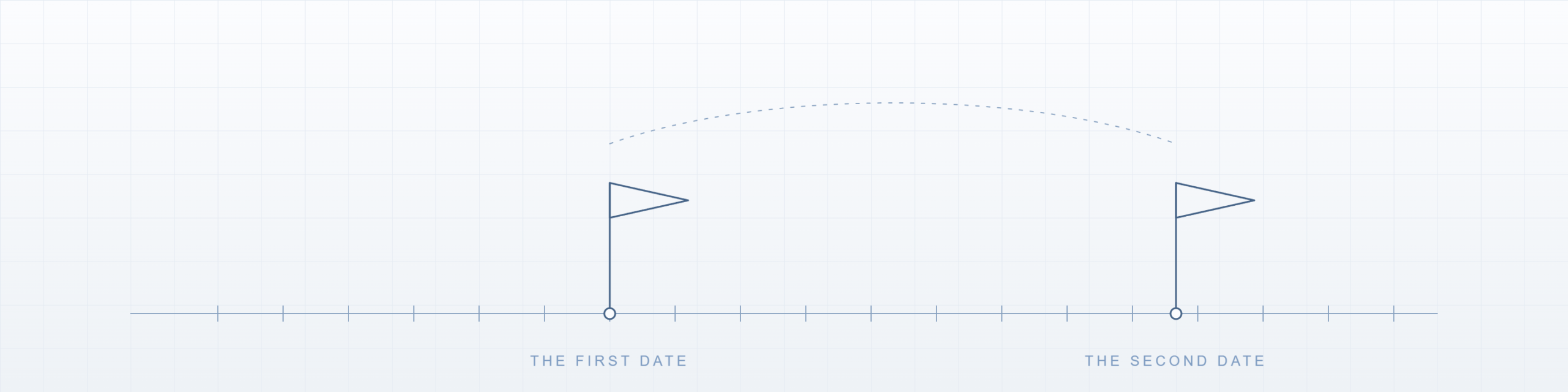
    A line drawing of a timeline with two flags planted at different points and joined by a dotted arc, labelled the first date and the second date.

    If you were born in 1953, you turn 73 during 2026, and 2026 is the first year for which the IRS requires a withdrawal from your traditional IRA, SEP or SIMPLE IRA, 401(k), 403(b), or 457 plan. The rule gives you a choice on the first one, and the choice is worth thinking through.

    The two deadlines

    Your first required minimum distribution is for 2026, but the law lets you defer it to April 1, 2027. Every later one is due by December 31 of its own year. So if you defer, you take the 2026 distribution and the 2027 distribution in the same calendar year, and both land on your 2027 return.

    Two distributions in one year is not always wrong. It is wrong when it pushes 2027 income into a higher bracket, over a Medicare income threshold, or into a higher share of Social Security being taxed. It can be right when 2026 is already a high-income year, for example the year you sold a business or took a final bonus, and 2027 will be quieter. The question is which of the two years has room.

    The Medicare point deserves its own sentence. Your 2029 Part B and Part D premiums will be set from your 2027 return. A doubled-up year does not just cost tax; it can cost a year of higher premiums two years later.

    How much

    Divide the account balance on December 31, 2025 by the factor for your age from the IRS Uniform Lifetime Table. At 73 the factor is 26.5. A $500,000 balance therefore requires $18,868 for 2026, and the balance on December 31, 2026 sets the 2027 figure at a factor of 25.5. If your spouse is your sole beneficiary and more than ten years younger, a different table applies and the figure is smaller. The RMD calculator on the Calculators page runs both.

    The withdrawal is computed account by account. IRAs can be aggregated and taken from any one of them; 401(k) and 403(b) balances cannot be satisfied from an IRA.

    Three things people get wrong

    • Roth accounts. A Roth IRA has no required distribution while you are alive, and since 2024 neither does a designated Roth account inside a 401(k) or 403(b). If the plan you are looking at is Roth, nothing is due.
    • Still working. If you are still employed by the sponsor of a 401(k) or 403(b) and you own less than 5% of the business, that plan can wait until you retire. This exception never applies to an IRA.
    • Younger cohorts. If you were born in 1960 or later, your age is 75, not 73. People born in 1959 sit in a gap between two provisions of the law; Treasury has proposed 73 but has not finalized it. There is time, because that group reaches 73 in 2032.

    What a miss costs

    The excise tax on a missed or short distribution is 25% of the shortfall, reduced to 10% if you correct it by the end of the second year after the year it was due. Custodians flag on Form 5498 that a distribution is required for the year, so a miss is visible.

    The New York angle

    New York does not tax your NYSLRS or NYSTRS pension, but it does tax IRA withdrawals, with one relief: if you are 59½ or older you can subtract up to $20,000 a year of pension and annuity income, and an IRA distribution qualifies. The subtraction is per person and does not carry forward, which is one more reason to prefer one distribution a year over two.

    What to do now

    Pull the December 31, 2025 balances for every pre-tax account, compute the 2026 figure, and estimate 2026 and 2027 income with and without deferral. If you would rather someone did that with you, start here.


    Reviewed September 12, 2026. Sources: IRS, Retirement plan and IRA required minimum distributions FAQs; Treasury Regulation section 1.401(a)(9)-9 (Uniform Lifetime Table); SECURE 2.0 Act sections 107 and 302.

    This article is general educational information and is not tax advice. Distribution ages, tables and penalties are set by federal law and regulation and can change. Confirm your own figures with your custodian and your tax preparer before acting.

    This page is general. Your situation is not.

    The first distribution has two deadlines rather than one, and taking both in the same year can move you into a higher bracket. We can cover it in a short conversation, at no charge and with no obligation.

    Book your Retirement ReviewNot ready to book? Answer a few questions about your situation, or send a message.

    Booking is handled through Rosefinch Investment Advisors. LI Retirement is not affiliated with, endorsed by, or sponsored by any government agency, retirement system, plan sponsor, or employer named on this site.

  • The Social Security COLA is announced in October. Here is what it will and will not tell you

    The Social Security COLA is announced in October. Here is what it will and will not tell you

    A line drawing of nine bars rising gently from left to right, joined by a line that continues upward past the last one, labelled each year, a little more.

    In the second half of October, when the Bureau of Labor Statistics publishes the September consumer price index, Social Security announces the cost-of-living adjustment for the following year. The 2026 adjustment was 2.8%, announced on October 24, 2025. The 2027 figure will arrive on the same schedule, and the coverage will treat it as news. What it changes was largely knowable.

    How the number is made

    The adjustment is the percentage rise in the CPI-W, the index for urban wage earners, from the third quarter of one year to the third quarter of the next. It is not a policy choice and it is not negotiated; it is the formula in the Social Security Act. It applies to every benefit in payment from the January check, and, through the indexing of the benefit formula, to the benefits of people who have not yet claimed.

    What else moves with it

    The same announcement resets the figures that shape planning for people still working. For 2026 the taxable maximum, the wage level above which no Social Security tax is due and no benefit is earned, rose to $184,500. The earnings test, which withholds benefits from people who claim before full retirement age and keep working, was set at $24,480 for the year, with $1 withheld for every $2 above it, and $65,160 in the year you reach full retirement age, with $1 withheld for every $3. The average retired worker’s benefit rose from $2,015 to $2,071 a month. Each of these will be restated for 2027 in the October release.

    What it does not tell you

    It does not tell you what your check will do. The Part B premium is deducted from most Social Security payments, and the 2027 premium is announced separately, in the fall. A 2.8% increase on a $2,071 benefit is $58; a Part B increase of a similar size absorbs most of it. The law’s hold-harmless rule stops the premium rise from reducing your net check below the prior month’s, if the premium is deducted from your benefit and you pay no income-related surcharge, but it does not promise a rise.

    It does not tell you when to claim. A COLA applies whether you claim at 62, at full retirement age or at 70, and the delayed retirement credits of 8% a year between full retirement age and 70 are added on top of it. The adjustment never makes claiming early cheaper. And it does not tell you what inflation did to you personally; the CPI-W is a wage earners’ basket, and a retiree’s spending on medical care and housing can run ahead of it or behind it.

    The Long Island angle

    New York does not tax Social Security, so the adjustment arrives without a state tax cost, and it has no effect on the $20,000 pension and annuity exclusion, which applies to other income. For a NYSLRS or NYSTRS retiree the two inflation adjustments are separate: the state pension’s own cost-of-living increase is set by state law on its own formula, applies to the first $18,000 of the benefit, and is not the Social Security figure.

    What to do with the announcement

    Read your own record rather than the headline. A my Social Security account at ssa.gov shows your earnings history and the benefit at each claiming age on your actual record, which is the figure that matters; the Social Security Claiming page explains how to read it. If you want to think through claiming age alongside a pension and the tax picture, start here.


    Reviewed September 12, 2026. Sources: Social Security Administration, 2026 Cost-of-Living Adjustment fact sheet and press release of October 24, 2025; Social Security Act section 215(i).

    This article is general educational information and is not advice about when to claim. Adjustments, limits and premiums are set by federal law and change every year. Confirm current figures with Social Security before acting.

    This page is general. Your situation is not.

    The adjustment changes the number, and it does not change the claiming decision underneath it. We can cover it in a short conversation, at no charge and with no obligation.

    Book your Social Security ReviewNot ready to book? Answer a few questions about your situation, or send a message.

    Booking is handled through Rosefinch Investment Advisors. LI Retirement is not affiliated with, endorsed by, or sponsored by any government agency, retirement system, plan sponsor, or employer named on this site.

  • A $20,000 Roth conversion New York does not tax: the pension exclusion before December 31

    A $20,000 Roth conversion New York does not tax: the pension exclusion before December 31

    A line drawing of six bars of increasing height against a dashed horizontal line, the last three crossing above it, labelled under and over.

    Every year, each New York taxpayer who is 59½ or older may subtract up to $20,000 of qualifying retirement income from New York taxable income, and a Roth conversion qualifies. For a household with a public pension that New York already exempts and a seven-figure IRA that New York will tax when the required distributions start, that subtraction is a $20,000 Roth conversion a year at a state cost of zero. It does not carry forward. Every year it is not used, it is gone.

    The rule

    The subtraction goes on line 29 of Form IT-201 and is capped at $20,000 per person regardless of source. A married couple who both qualify can subtract up to $40,000, but each spouse’s $20,000 applies only to that spouse’s own income; one spouse cannot use the other’s unused room. Qualifying income is periodic and lump-sum payments from an IRA, a 401(k), a 403(b), a Keogh, or a private pension or annuity, as long as they are included in federal adjusted gross income.

    Two kinds of income do not need it. A NYSLRS or NYSTRS pension, a New York local government pension, and a federal pension are exempt from New York tax in full on a separate line, line 26, with no cap. Social Security is not taxed by New York at all. If those are your only sources, line 29 is empty, and that is where the waste happens.

    What a large IRA makes of it

    Consider a retired Suffolk County police lieutenant or a Nassau superintendent: a $150,000 New York public pension that the state exempts in full, Social Security that the state does not tax, and a 457 or IRA balance of $1.4 million that is not touched until required distributions begin at 73. Every one of those years, a $20,000 subtraction that could have sheltered a conversion goes unused. At 73 the first required withdrawal is roughly $53,000 of income that is federally and New York taxable in full, and the exclusion covers $20,000 of it at most. Fourteen years of unused room, from 59½ to 73, is $280,000 that could have moved into a Roth with no New York tax at all, and the federal cost of doing it at $20,000 a year is lower than the cost of the same dollars arriving later on top of a pension and Social Security.

    A Roth conversion qualifies. The Department of Taxation and Finance has said since 1998 that a taxpayer 59½ or older can exclude up to $20,000 of income from converting a traditional IRA to a Roth IRA. For a retiree with no other qualifying income, converting $20,000 a year from 59½ to 73 moves money that would eventually be taxed into an account that never is, at a New York cost of zero, leaving only the federal tax on the conversion to weigh. The cap is $20,000 in total, so a private pension or an IRA withdrawal in the same year uses the same room.

    The year-end move

    Before December 31, add up the qualifying retirement income you have already taken this year. If it is under $20,000 per eligible spouse, decide whether a withdrawal or a partial Roth conversion for the difference makes sense federally: the federal bracket, the Medicare premium two years out, and the taxation of Social Security all move with federal income even when New York does not. A conversion has to be complete by December 31 to count for the year, and it cannot be undone.

    If you turn 59½ during the year, only qualifying income received on or after that date counts toward the exclusion for the year; income taken before it does not. Time the withdrawal accordingly.

    Where to look

    The New York Retirement Taxes page sets out the three tiers of New York treatment and where each subtraction goes on the return. The Medicare calculator on the Calculators page shows what an extra $20,000 of federal income does to a premium threshold. If you would like the year-end figure worked out with you, start here.


    Reviewed September 12, 2026; retitled and reframed toward the Roth conversion angle September 13, 2026. Sources: New York Tax Law section 612(c)(3) and (3-a); Form IT-201 instructions for tax year 2025, lines 26 and 29; TSB-M-98(7)I (Roth IRA conversions and the pension and annuity income exclusion).

    This article is general educational information and is not tax advice. The exclusion amount, age test and line references are set by New York law and can change. Confirm current figures with the New York State Department of Taxation and Finance and your tax preparer before acting.

    This page is general. Your situation is not.

    The exclusion is claimed a year at a time, and a conversion decided in December is settled for that year. We can cover it in a short conversation, at no charge and with no obligation.

    Book your Retirement ReviewNot ready to book? Answer a few questions about your situation, or send a message.

    Booking is handled through Rosefinch Investment Advisors. LI Retirement is not affiliated with, endorsed by, or sponsored by any government agency, retirement system, plan sponsor, or employer named on this site.

  • Rates went up this year. Your pension lump-sum offer probably went down

    Rates went up this year. Your pension lump-sum offer probably went down

    A line drawing of a balance scale tilted so that the pan labelled rates sits high and the pan labelled the offer sits low.

    If you have a legacy pension from a corporate employer and the plan offers a lump sum instead of the monthly benefit, the size of that lump sum is not a negotiation. It is an arithmetic result of your promised monthly amount, an IRS mortality table, and three interest rates that the IRS publishes every month under section 417(e)(3) of the tax code. When those rates rise, the lump sum for the same pension falls.

    What moved

    In January 2026 the three segment rates were 4.03%, 5.20% and 6.12%. For July 2026, the most recent month published, they were 4.62%, 5.62% and 6.51%. The first rate discounts payments in the first five years, the second covers years five to twenty, and the third everything after.

    Using the IRS mortality table that applies for 2026, a $2,000 a month single-life pension starting at 65 is worth about $309,100 at the January rates and about $296,000 at the July rates, roughly 4.2% less for the identical promise. At 60 the gap is nearer 4.7%, because more of the payments sit in the later, higher-rate segments. These are illustrations from the published tables, not a quote from any plan.

    Which month your plan uses

    Plans do not use the current month. Each plan document names a lookback month and a stability period; one design fixes the lump-sum basis for a whole calendar year from the rates of a month in the prior year, for example August, October or November. That has two consequences. First, if your plan’s 2027 basis is set from a late-2026 month, the offers you see next year will reflect this year’s higher rates. Second, if you are already eligible to retire, the offer available in 2026 was set from a 2025 month, and it may be the larger of the two. The plan document states the month and the period, and the plan administrator can tell you which apply to you; ask before you rely on an offer.

    Smaller lump sum does not mean take the pension

    A lower lump sum is the same promise priced at a higher rate, so in principle the two are still equivalent. The choice turns on things the formula ignores: your health and your spouse’s, whether the plan is well funded and what the Pension Benefit Guaranty Corporation would cover if it were not, whether you need the money to be flexible or need it to be automatic, and what the lump sum would have to earn to replace the pension for as long as you both live. On the last point, the annuity calculator on the Calculators page turns a balance back into a monthly figure on the same IRS basis, so you can compare a lump sum against what it would buy.

    Who this applies to on Long Island

    This is a corporate-plan decision. NYSLRS and NYSTRS do not offer a lump sum in place of the monthly allowance; the choices there are the survivor options at retirement. Where the question does arise locally is with a legacy pension from a utility, defense, financial or telecom employer, and with hospital systems that have frozen a defined benefit plan. New York taxes a private pension above the $20,000 annual exclusion, and it taxes a rolled-over lump sum when withdrawn on the same basis.

    If an offer is on your desk

    Get the plan’s relative value disclosure, the lookback month, and the monthly benefit at your normal retirement age, then compare the offer to what the same monthly amount costs on the open market. If you would like that comparison run with you, start here.


    Reviewed September 12, 2026. Sources: IRS Notice 2026-51 (July 2026 segment rates, Internal Revenue Bulletin 2026-38); IRS minimum present value segment rates table; IRS Notice 2025-40 (applicable mortality table for 2026); Internal Revenue Code section 417(e)(3).

    This article is general educational information and is not investment or tax advice. The illustrations use published IRS tables and are not a quote from any plan; your plan’s own basis, lookback month and benefit formula govern. Confirm figures with your plan administrator before deciding.

    Several of these choices cannot be undone.

    A lump sum offer is priced off rates that move month to month, and the election is permanent once made. We can cover it in a short conversation, at no charge and with no obligation.

    Book your Pension ReviewNot ready to book? Answer a few questions about your situation, or send a message.

    Booking is handled through Rosefinch Investment Advisors. LI Retirement is not affiliated with, endorsed by, or sponsored by any government agency, retirement system, plan sponsor, or employer named on this site.

  • Retiring from NYSLRS in 2027? The application window is 15 to 90 days, and the option deadline is tighter than you think

    Retiring from NYSLRS in 2027? The application window is 15 to 90 days, and the option deadline is tighter than you think

    A line drawing of a timeline with a bracketed window in the middle and a clock above it, labelled not yet, the window, and too late.

    If you plan to retire from a Nassau or Suffolk county job, a town or village, or state service in 2027, the application itself is a short window inside a long decision. The Office of the State Comptroller publishes the rules, and the dates are firm. Teachers in NYSTRS follow a separate process with its own deadlines, which is not covered here.

    When to file

    You must apply at least 15 days and no more than 90 days before your retirement date. The application is filed in Retirement Online or on form RS 6037, which must be notarized. Filing early is not possible; an application received more than 90 days ahead will not be accepted. Filing late moves the date.

    Your retirement date can be any day, including a weekend or a holiday, so if your last day of work is a Friday your retirement date can be the Saturday. That flexibility matters for the final average earnings calculation and for service credit, and for a member below normal retirement age in a tier with an age reduction, a date a few weeks later can change the reduction. The pension estimator on the Calculators page shows the effect of the date; Retirement Online’s Estimate My Pension Benefit tool does it from the actual record and should be run first.

    What to have ready

    • Proof of date of birth. No benefit is paid until NYSLRS has it. A birth certificate, passport, driver’s license, marriage certificate, baptismal certificate, DD-214 or naturalization papers are accepted.
    • Your beneficiary and option decision. The payment option governs what a survivor receives, and the deadline to change it is short.
    • The estimate from Retirement Online, which uses your actual service and earnings.

    The option deadline

    For most members the pension payment option must be selected by the end of the month in which you retire. Once selected, you have 30 days after the first day of the following month to change it. Members of ERS Tiers 4, 5 and 6 under Article 15 must select by the retirement date itself. After the window closes the option is final, whatever your circumstances later become. Decide the option before you file, not after the first payment.

    What happens to the money

    For most members the first pension payment arrives at the end of the month following the month you retire, so a retirement in late January is first paid at the end of February. Plan for one month of bridging cash. The NYSLRS pension is exempt from New York State income tax in full; it is federally taxable, and the first retirement year, with final salary and a first pension in the same year, is often the highest-income year in the sequence and the one that sets the Medicare premium two years on. The county employees and teachers pages cover the tier rules in full.

    A working timeline

    Twelve months out, run the Retirement Online estimate and settle the date. Ninety days out, the window opens; file with proof of date of birth. Fifteen days out, it closes. By the end of the retirement month, the option is chosen; thirty days after the first of the next month, it is final. If you would like to walk through the option choice before filing, start here.


    Reviewed September 12, 2026. Sources: Office of the New York State Comptroller, Preparing and Applying for Retirement (rev. August 2025); Application for Service Retirement, form RS 6037.

    This article is general educational information and is not advice about your retirement application. Filing windows, deadlines and option terms are set by the Retirement System and can change. Confirm your own dates with NYSLRS and your employer before filing.

    Several of these choices cannot be undone.

    The filing date sets the payment start, and the option election that goes with it cannot be changed afterwards. We can cover it in a short conversation, at no charge and with no obligation.

    Book your Pension ReviewNot ready to book? Answer a few questions about your situation, or send a message.

    Booking is handled through Rosefinch Investment Advisors. LI Retirement is not affiliated with, endorsed by, or sponsored by any government agency, retirement system, plan sponsor, or employer named on this site.